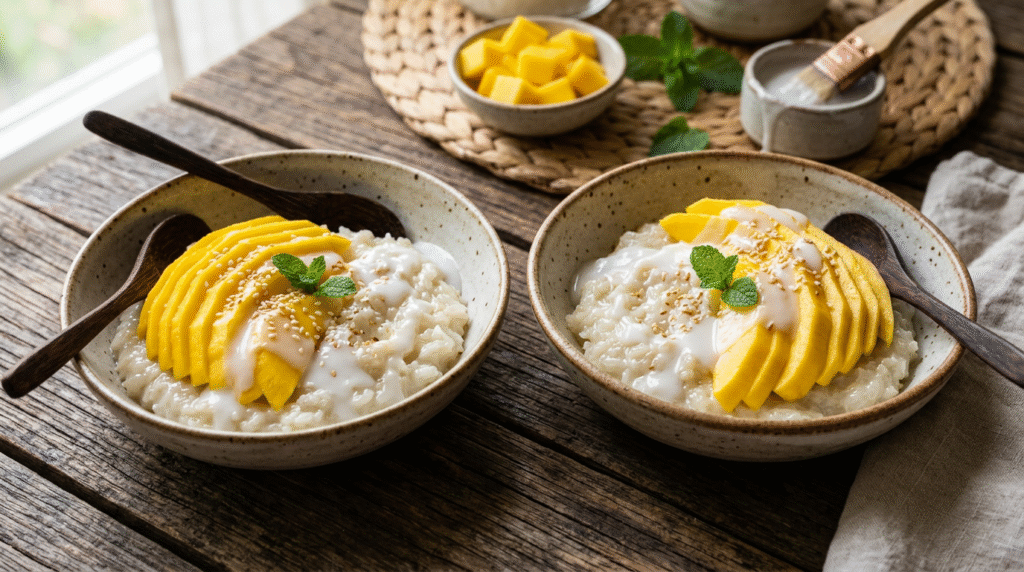
Craving a taste of the tropics without the fuss? These Quick & Easy Vegan Mango Sticky Rice Bowls bring the beloved flavors of traditional Thai mango sticky rice right to your kitchen, in a fraction of the time and completely plant-based. Imagine perfectly cooked, chewy glutinous rice infused with a rich, sweet coconut milk sauce, generously topped with slices of ripe, juicy mango. It’s a symphony of textures and flavors – creamy, sweet, slightly salty, and utterly refreshing. This recipe solves the craving for an exotic, satisfying dessert that’s both dairy-free and gluten-free, making it accessible for many dietary needs.
Forget complicated steps or long waits; this recipe is designed for speed and simplicity, proving that incredible flavor doesn’t have to come with a hefty time commitment. Whether you’re looking for a delightful weeknight dessert, a unique brunch item, or a sweet treat to share with friends, these mango sticky rice bowls deliver. The combination of warm, comforting rice with cool, vibrant mango creates an irresistible contrast that will transport your taste buds straight to a sun-drenched beach. Get ready to fall in love with this quick, creamy, and utterly delicious vegan twist on a classic!
Recipe Info
- Prep Time: 15 minutes
- Cook Time: 25 minutes
- Total Time: 40 minutes
- Yield: 4 servings
Ingredients
For the Sticky Rice
- 1 cup glutinous rice (sweet rice)
- 1 ½ cups water (for cooking rice)
For the Coconut Sauce
- 1 (13.5 oz / 400ml) can full-fat coconut milk
- ½ cup granulated sugar (or maple syrup for refined sugar-free)
- ¼ teaspoon salt
For Serving
- 2 large ripe mangoes, peeled and sliced
- Optional: Toasted sesame seeds or fresh mint for garnish
Step-by-Step Instructions
- Rinse the Rice: Place the glutinous rice in a fine-mesh sieve and rinse under cold running water until the water runs clear. This removes excess starch, which is crucial for achieving the perfect sticky texture.
- Soak the Rice: Transfer the rinsed rice to a bowl, cover with fresh cold water, and let it soak for at least 30 minutes, or up to 4 hours. Soaking helps the rice cook more evenly and become tender.
- Cook the Rice: Drain the soaked rice thoroughly. You can cook it using a rice cooker or stovetop.
- Rice Cooker Method: Place the drained rice and 1 ½ cups of water into your rice cooker. Cook according to your rice cooker’s instructions for white rice.
- Stovetop Method: Place the drained rice and 1 ½ cups of water in a medium saucepan with a tight-fitting lid. Bring to a boil over medium-high heat, then immediately reduce heat to low. Cover and simmer for 15-20 minutes, or until all the water is absorbed and the rice is tender and sticky. Do not lift the lid during cooking.
- Prepare the Coconut Sauce: While the rice cooks, combine the full-fat coconut milk, sugar, and salt in a small saucepan. Heat over medium-low heat, stirring occasionally, until the sugar is fully dissolved. Do not boil. Remove from heat.
- Combine Rice and Sauce: Once the rice is cooked, immediately transfer it to a large bowl. Pour about ¾ of the warm coconut sauce over the hot rice. Stir gently with a spoon or spatula until the rice has absorbed most of the sauce and becomes glossy and fragrant. Cover the bowl and let it sit for 10-15 minutes to allow the rice to fully absorb the flavors and become even stickier.
- Assemble the Bowls: While the rice is resting, peel and slice your ripe mangoes. Divide the warm coconut sticky rice among four serving bowls. Arrange the fresh mango slices alongside the rice.
- Serve: Drizzle the remaining coconut sauce over the mango and rice. Garnish with toasted sesame seeds or a sprig of fresh mint, if desired. Serve warm or at room temperature.
Pro Tips for Success
- Rinse Rice Thoroughly: Don’t skip rinsing the glutinous rice until the water runs clear. This step is essential for removing excess starch, which prevents the rice from becoming gummy and ensures a perfectly sticky, yet distinct, grain texture.
- Use Full-Fat Coconut Milk: For the creamiest, most authentic flavor and texture in your coconut sauce, always opt for full-fat canned coconut milk. Light coconut milk will result in a thinner, less rich sauce that won’t coat the rice as beautifully.
- Choose Ripe Mangoes: The success of this dessert heavily relies on the quality of your mangoes. Select mangoes that are fragrant, slightly soft to the touch (like a ripe avocado), and have a vibrant color. Varieties like Ataulfo (honey mango) or Alphonso are excellent choices for their sweetness and smooth texture.
- Let the Rice Rest: After pouring the warm coconut sauce over the hot rice, cover the bowl and let it rest for at least 10-15 minutes. This crucial step allows the rice grains to fully absorb the sweet coconut milk, intensifying the flavor and achieving that signature tender, sticky consistency.
Variations & Substitutions
- Sweetener Swaps: If you prefer a refined sugar-free option, substitute the granulated sugar in the coconut sauce with an equal amount of maple syrup or agave nectar. The flavor will be slightly different but still delicious.
- Other Fruits: While mango is traditional, you can experiment with other tropical fruits like fresh pineapple slices, lychees, or even ripe peaches when in season. Just be aware the flavor profile will shift.
- Higher Protein Option: For a slight protein boost, sprinkle a handful of chopped, toasted nuts like cashews or pistachios over your finished bowls. This also adds a delightful crunch.
- Spiced Coconut Sauce: For an extra layer of flavor, infuse your coconut sauce with a pandan leaf (if available) while it simmers, or add a pinch of ground cardamom or a tiny dash of vanilla extract.
- Gluten-Free & Dairy-Free: This recipe is naturally gluten-free and dairy-free, making it an excellent choice for those with specific dietary needs. Always double-check your coconut milk brand to ensure no hidden additives.
Serving Suggestions
These Quick Vegan Mango Sticky Rice Bowls are a versatile delight! They are most commonly enjoyed as a refreshing dessert after a light meal, especially Asian-inspired cuisine. However, their balanced sweetness and satisfying texture also make them a wonderful option for a unique brunch dish or a delightful afternoon snack. Serve them slightly warm or at room temperature for the best experience, allowing the creamy rice and cool mango to create a perfect harmony. A light sprinkle of toasted sesame seeds or a few fresh mint leaves adds a beautiful finish and a subtle aromatic touch.
Storage & Reheating
Fridge: Leftover mango sticky rice can be stored in an airtight container in the refrigerator for up to 2-3 days. Keep the mango slices separate from the rice if possible, as the mango can release moisture and soften the rice over time.
Freezer: Freezing is not recommended for the assembled dish, as the mango’s texture will degrade significantly upon thawing. However, the cooked coconut sticky rice itself can be frozen in an airtight container for up to 1 month. Thaw in the refrigerator overnight. When ready to serve, gently warm the rice and add fresh mango slices and a fresh drizzle of coconut sauce.
Reheating: To reheat the rice, gently warm it in the microwave for short bursts (30-60 seconds) until just warm, or in a saucepan over low heat, adding a splash of fresh coconut milk if it seems dry. Always add fresh mango slices just before serving for the best taste and texture.
Frequently Asked Questions
Q: Can I use regular white rice instead of glutinous rice?
A: No, glutinous rice (also known as sweet rice or sticky rice) is essential for this recipe. Regular white rice, such as jasmine or basmati, will not achieve the unique sticky, chewy texture that defines mango sticky rice. Glutinous rice has a different starch composition that makes it incredibly sticky when cooked.
Q: Can I make mango sticky rice ahead of time?
A: You can prepare the coconut sticky rice and the coconut sauce a few hours in advance. Store them separately at room temperature (if serving within a few hours) or in the refrigerator. However, it’s best to slice the mangoes and assemble the bowls just before serving to ensure the freshest taste and best texture of the mango.
Q: How do I choose a perfectly ripe mango?
A: A ripe mango will have a fragrant, sweet aroma near the stem. It should also give slightly when gently squeezed, similar to a ripe avocado. Don’t rely solely on color, as some varieties remain green even when ripe. Avoid mangoes with bruised or shriveled skin.
Final Thoughts
These Quick Vegan Mango Sticky Rice Bowls are more than just a dessert; they’re an invitation to enjoy a moment of tropical bliss, made effortlessly in your own kitchen. The harmonious blend of creamy, sweet coconut rice and vibrant, juicy mango is truly irresistible, proving that plant-based indulgence can be both simple and spectacularly delicious. So, grab your ripe mangoes, whip up this easy recipe, and treat yourself to a taste of paradise. Your taste buds will thank you!